From first words to board results.
Five stages aligned to NEP 2020, taught in English by subject-qualified teachers, from Nursery to Class XII.
Foundational stage
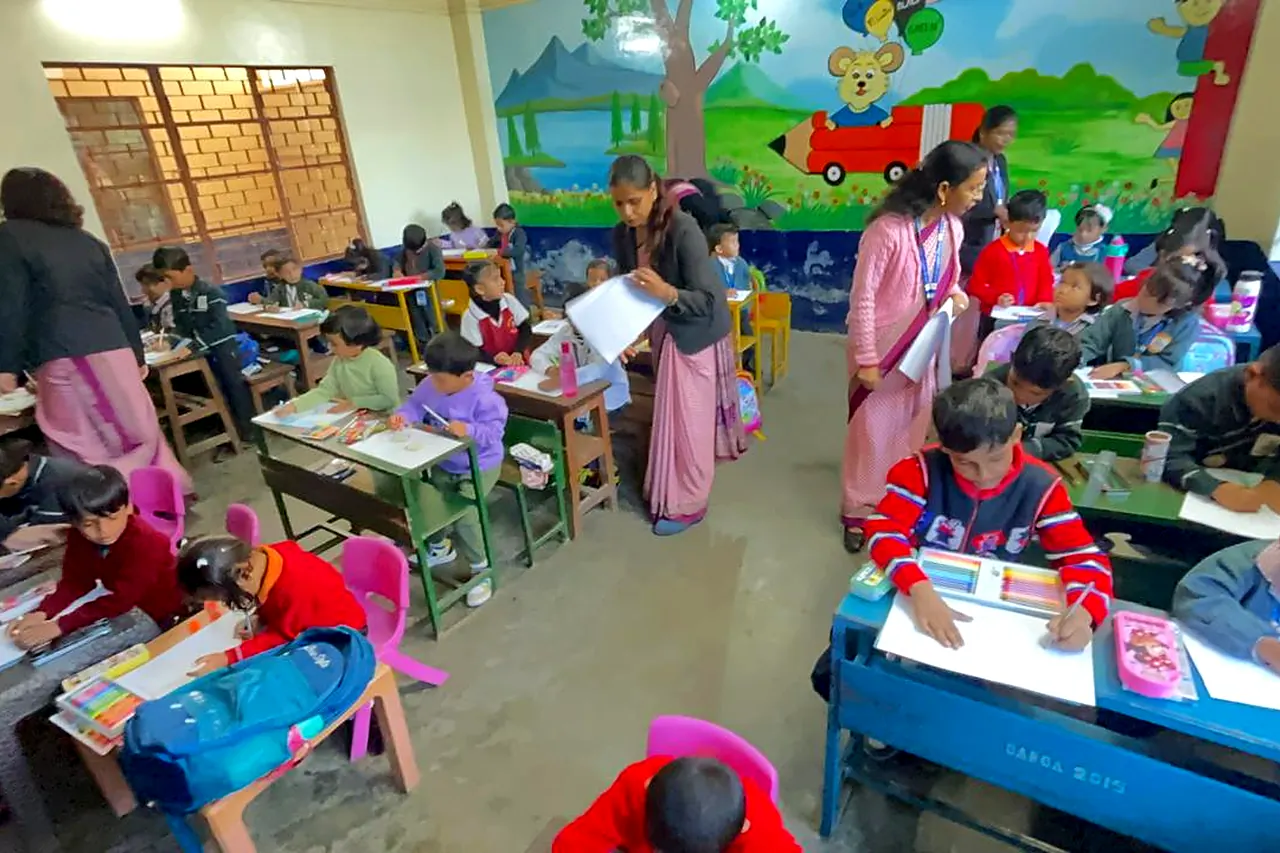
Play-based, language-rich and unhurried. Children learn that school is a place where curiosity is rewarded.
Nursery, LKG, UKG, Classes I–II
- Structured play with a literacy, numeracy or motor-skill aim behind every activity
- Phonics, picture reading and storytelling before formal handwriting
- Number learnt through objects before symbols
- No examinations — observation-based progress shared with parents each term
Preparatory stage
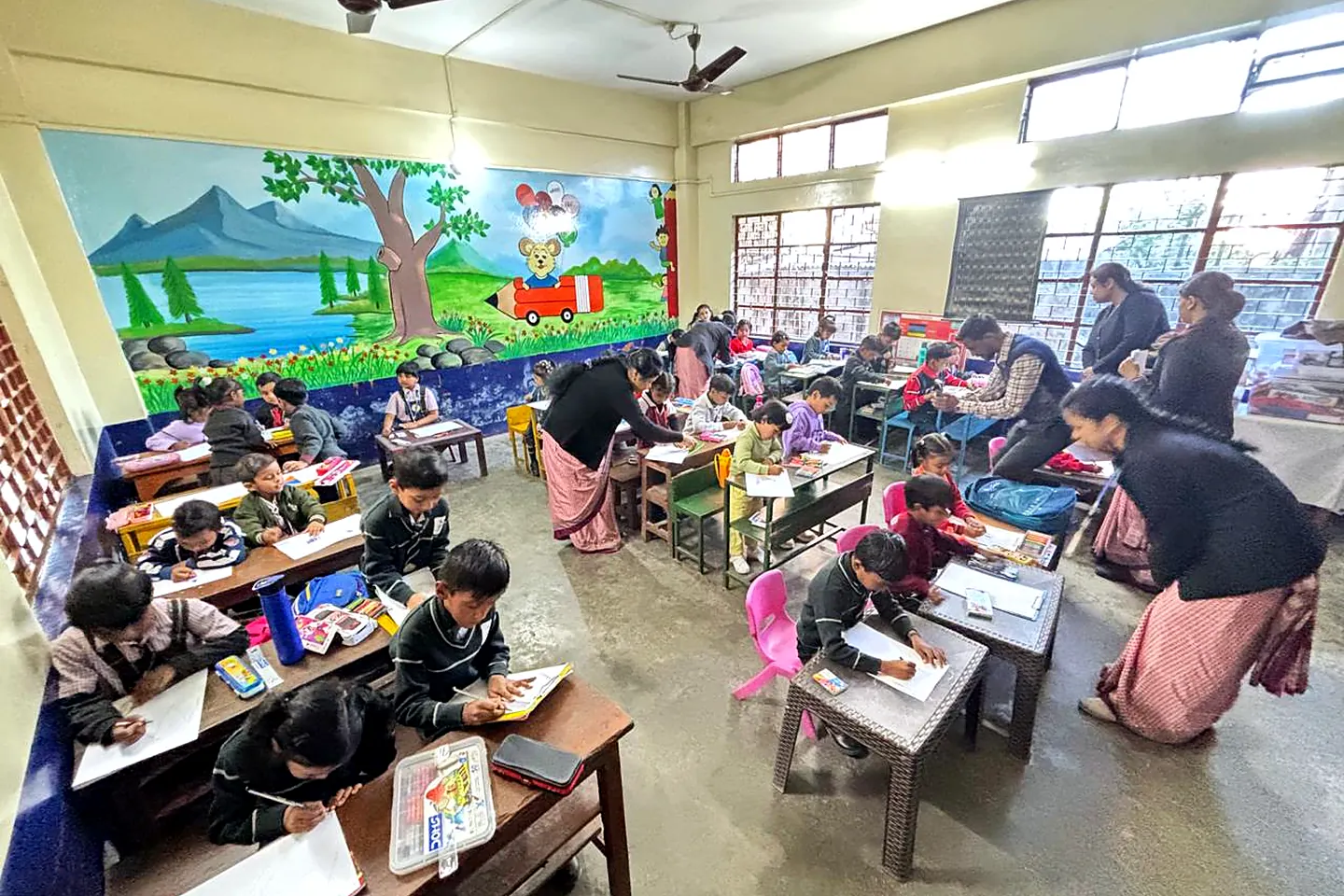
Foundational skills become tools. Children read to find things out and write to explain their thinking.
Classes III–V
- Project work, group investigation and presentation from Class III
- English as the medium, with Assamese and Hindi taught formally
- Periodic tests and two terminal examinations, weighed with classwork
- Computer basics: keyboard fluency, files and safe internet use
Middle stage
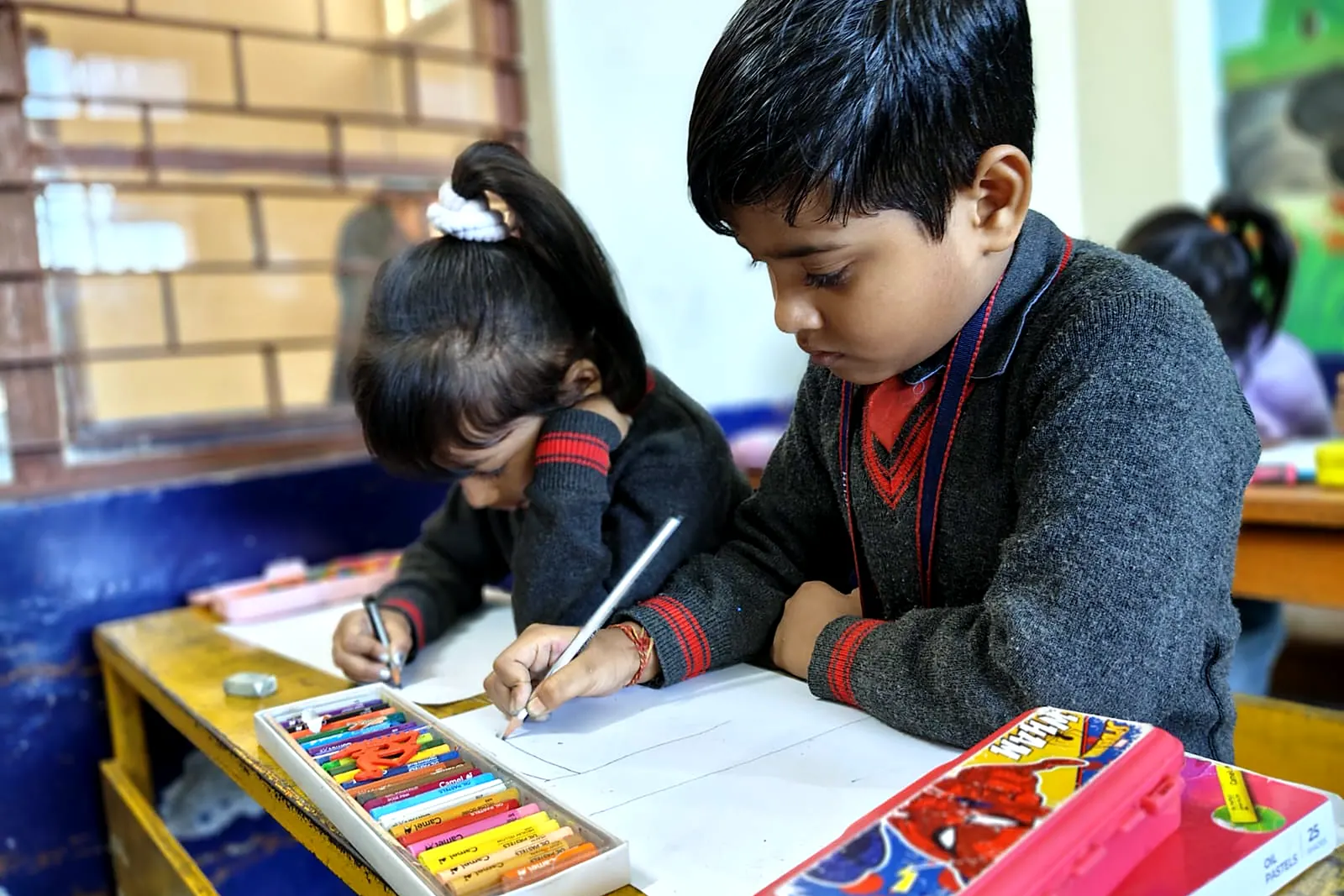
Subjects gain their own logic, taught by specialist teachers — and students learn how to study.
Classes VI–VIII
- Laboratory work in Science from Class VI
- Note-making, revision planning and exam technique taught explicitly
- Sanskrit or Computer Science chosen as an elective
- Full co-curricular load: sport, music, dance, drama, NCC and Scouts & Guides
Secondary stage
The full CBSE secondary curriculum, ending in the Class X board examination.
Classes IX–X
- English, Mathematics, Science, Social Science and a second language
- Predictable assessment cycles and published syllabus coverage
- Remedial hours on the timetable, not improvised
- Stream counselling in Class X, with parents, before Science or Commerce is chosen
Senior Secondary stage
Two streams, one board examination, and the guidance to decide what comes next.
Classes XI–XII · Science & Commerce
- Science: Physics, Chemistry, and Mathematics or Biology, with English
- Commerce: Accountancy, Business Studies, Economics — with or without Mathematics
- Computer Science as an optional subject in both streams
- Support for JEE, NEET, CUET and commerce-stream pathways
Two streams.
Physics and Chemistry with Mathematics (towards engineering and the pure sciences) or Biology (towards medicine and the life sciences), with English Core. Computer Science and Physical Education are optional.
Accountancy, Business Studies and Economics, with English Core — with or without Mathematics. Leads to B.Com, CA, CS, CMA, BBA and economics degrees. Computer Science and Physical Education are optional.
Streams are chosen in Class X in a conversation between the student, their parents and the class teacher, with the Class X performance in front of them.
Six principles.
Short enough that every teacher can hold all six in mind on an ordinary Tuesday.
Teach the child in front of you
Assessment exists to find what a child has not understood — a rank alone tells a teacher nothing to act on.
Experience before abstraction
Objects before numerals in the early years; laboratory work before theory in the middle and senior years.
Projects that count
Project work sits on the assessment scheme. Students research, build, then explain and defend what they made.
Remedial time, timetabled
A topic that needs teaching twice is taught twice — in school hours, by the child's own teacher.
Language, deliberately
English as the medium; Assamese, Hindi and Sanskrit taught properly. Multilingualism is an NEP goal and an Assam reality.
Parents in the loop
Termly parent–teacher meetings with written reports, and the ERP portal for attendance, marks and fees in between.
Find the right stage for your child.
Tell us your child's age and current class, and we will talk you through where they would join.